
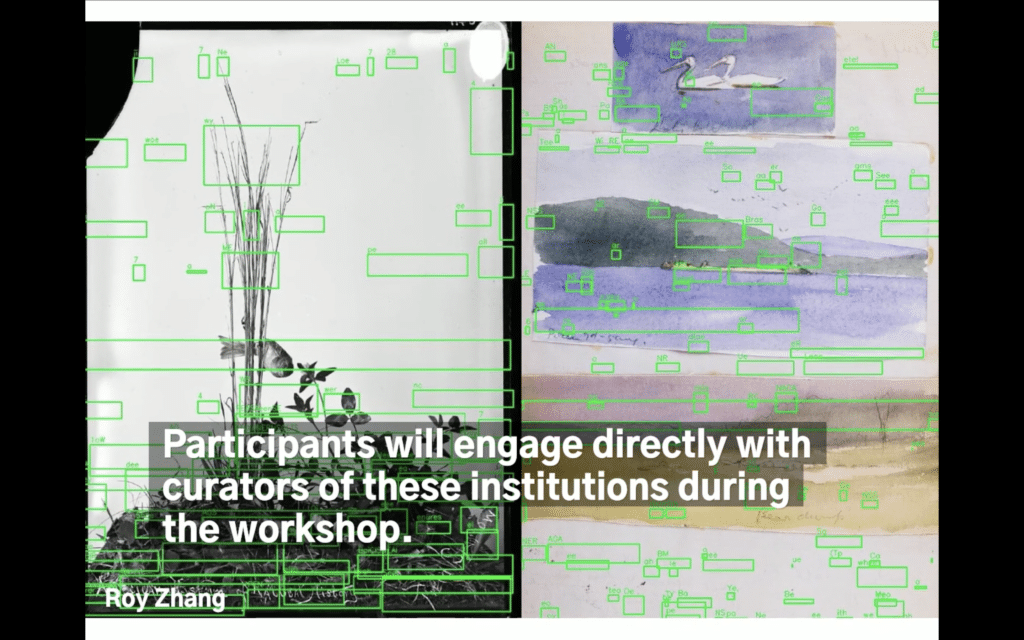
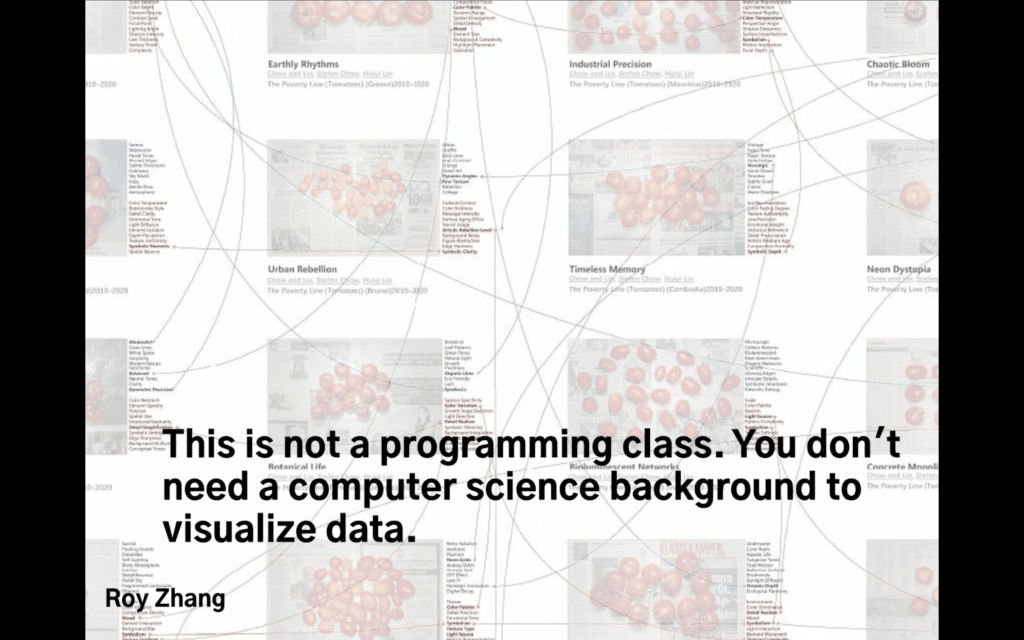
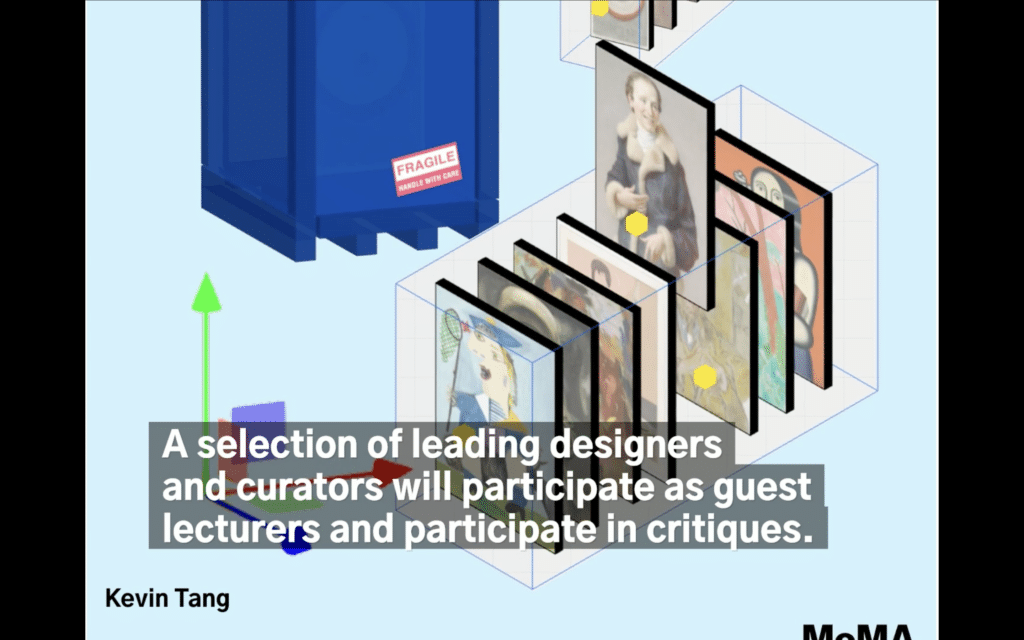
I’m thrilled to announce that Harvard’s Graduate School of Design has invited me to teach a second semester long workshop! It’s called Re-imagining the Archive, and we’ll be engaging with the holdings of prominent institutions like MoMA and Harvard Art Museums to investigate the intersection of culture, technology and society. We recently published a “studio” report sharing the results of last year’s workshop, and it’s available for download at Harvard Design Magazine.
I made a short movie introducing some of the workshop concepts to prospective students, viewable here. One thing to say about the course is that, like last year, I’m encouraging students to vibe code using AI tools, so long as they’re explicit about what they’re doing. Prompts, software packages, services, everything’s on the table. Those suspicious of the use of AI in educational settings like this one needn’t look further than Cory Doctorow’s wonderful “Pluralistic: The Reverse-Centaur’s Guide to Criticizing AI (05 Dec 2025).” He differentiates between two different kinds of centaurs, which is what he calls human/AI collaborators:
In automation theory, a “centaur” is a person who is assisted by a machine. You’re a human head being carried around on a tireless robot body. Driving a car makes you a centaur, and so does using autocomplete.
And obviously, a reverse centaur is a machine head on a human body, a person who is serving as a squishy meat appendage for an uncaring machine.
I know which one I’d rather be, and I encourage my students to do the same.
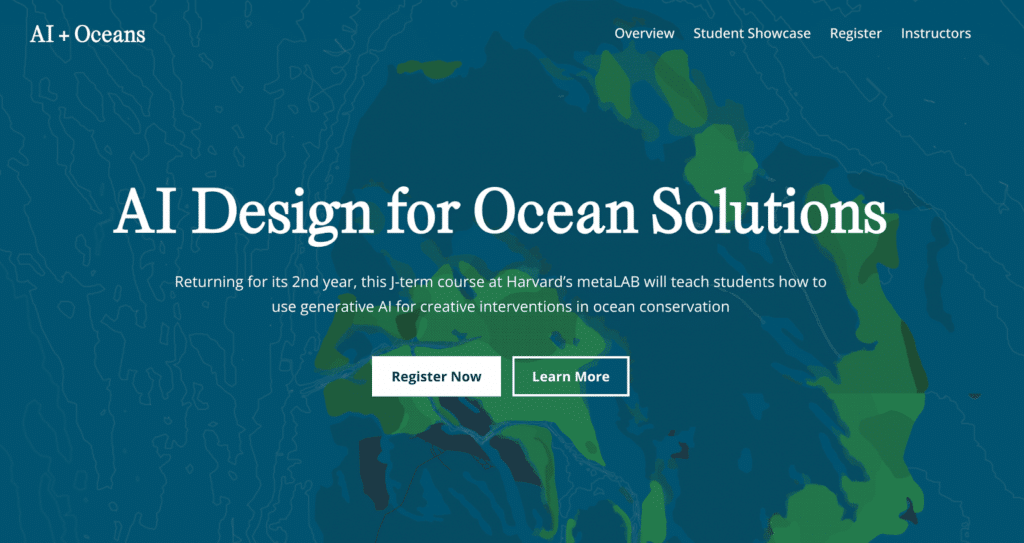
And! Bonus material! New friend Sarah Newmann at Harvard’s MetaLab invited me to co-teach, with her and her twin(!) sister, my first workshop as a MetaLab fellow. It’s called AI Design for Ocean Solutions, and we’ll be teaching students how to use generative AI for creative interventions in ocean conservation.
If you find yourself in Cambridge this semester, look me up!